MEKSMART
GENERAL NEWS

Author: Meksmart .
Update: 05/02/2026
THE B2B TREND IS CHANGING: CAN ERP MEET SUPPLY CHAIN DEMANDS
ERP has long been regarded as a core platform that helps B2B enterprises standardize operations, control data, and maintain stability in management. However, as B2B buying behavior increasingly becomes “B2C-like” faster, more transparent, and with less friction traditional ERP systems alone are no longer sufficient to create sustainable growth advantages. As customer experience becomes a key competitive factor, the supply chain is no longer just a back-end operational function; it has become a direct driver influencing purchasing decisions. This raises a critical question for B2B enterprises: can existing ERP systems still fulfill their role as growth enablers in today’s evolving landscape?
Let’s explore the answer with Meksmart in the article below.
1. ERP and Its Foundational Role in the B2B Supply Chain
ERP (Enterprise Resource Planning) is a technology solution designed to integrate production and business management activities into a unified system, enabling automation and standardization of operational processes.
Instead of operating across disconnected systems such as accounting, HR, or customer service software, ERP enables B2B enterprises to:
- Centralize order management, finance, and resource planning
- Standardize data and operational processes
- Ensure stability and control across the supply chain
By design, ERP systems primarily serve internal management needs. They excel at recording, consolidating, and reporting data functions that are largely retrospective in nature. When business operations run according to plan, ERP helps enterprises operate efficiently and mitigate risks.
However, as markets become increasingly competitive and demand real-time responsiveness and seamless experiences, the limitations rooted in ERP’s original design philosophy begin to surface. ERP implementation in B2B environments also varies significantly by industry and business model, requiring both enterprises and technology providers to deeply understand internal processes in order to customize and integrate effectively.
Especially in B2B contexts where purchasing processes are complex, the supply chain is not merely a system challenge it must be closely aligned with real operational workflows across departments, from sales and warehousing to finance and after-sales services.
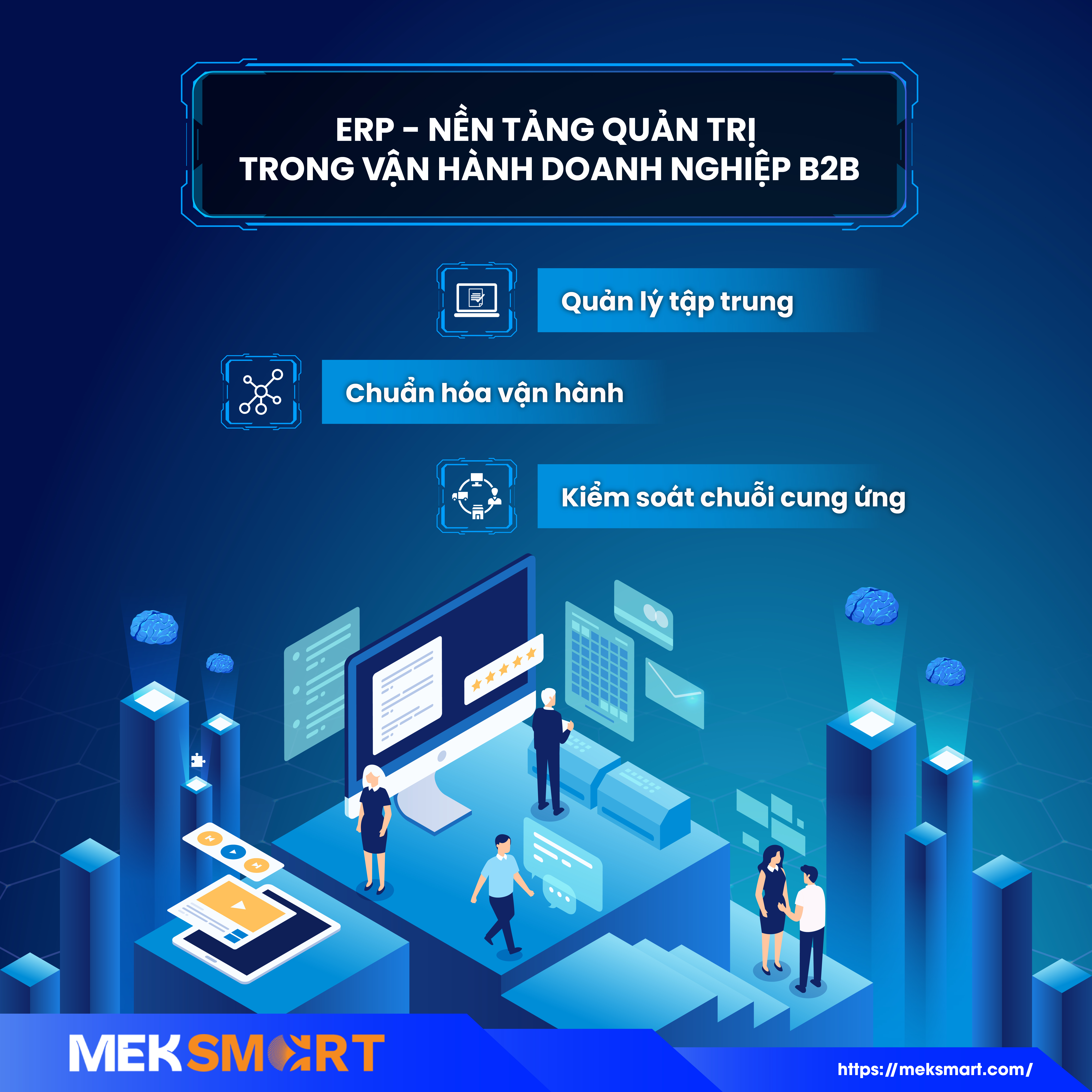
ERP – The Management Backbone of B2B Operations
2. ERP in Modern B2B: New Requirements for Supply Chain Integration
As B2B buying behavior increasingly mirrors B2C expectations, ERP systems can no longer remain confined to internal management roles; they must meet new demands that directly impact the supply chain and customer experience.
First, real-time data connectivity has become a mandatory requirement. B2B customers expect accurate, up to date information on inventory availability, delivery timelines, and order status. This requires ERP systems to be tightly integrated with all components of the supply chain.
Second, ERP must support execution not just data recording. Order processing workflows need to be orchestrated seamlessly across sales, warehousing, and delivery, reducing delays, minimizing errors, and enhancing reliability.
Finally, supply chain integration capability has become a decisive factor. An ERP system operating in isolation can no longer meet modern demands for speed and flexibility. Only when integrated with specialized solutions can ERP truly function as the central platform in a modern B2B ecosystem.

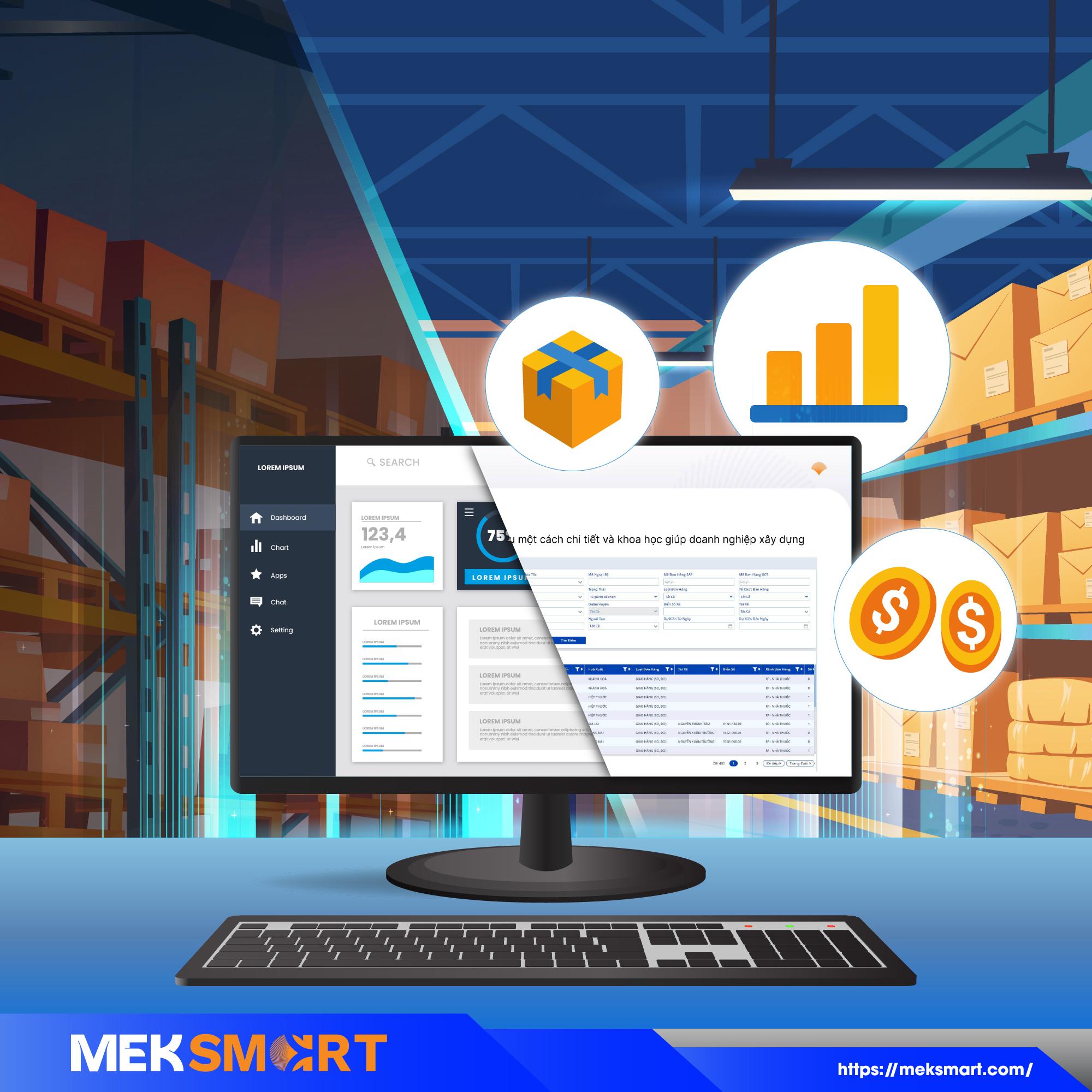
New Requirements for ERP in the Modern B2B Supply Chain
3. Meksmart – Elevating Existing ERP Systems for the Modern B2B Supply Chain
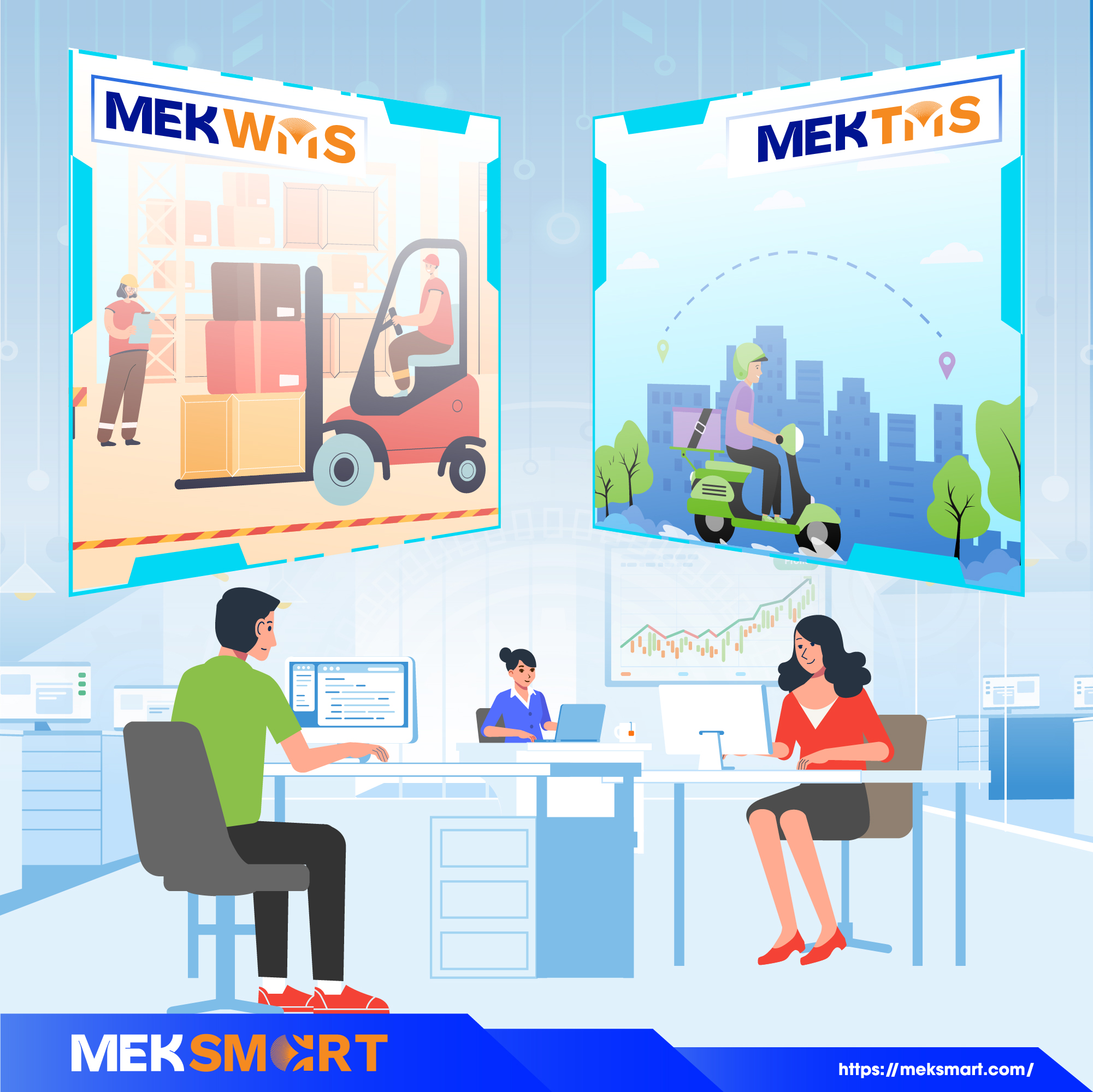
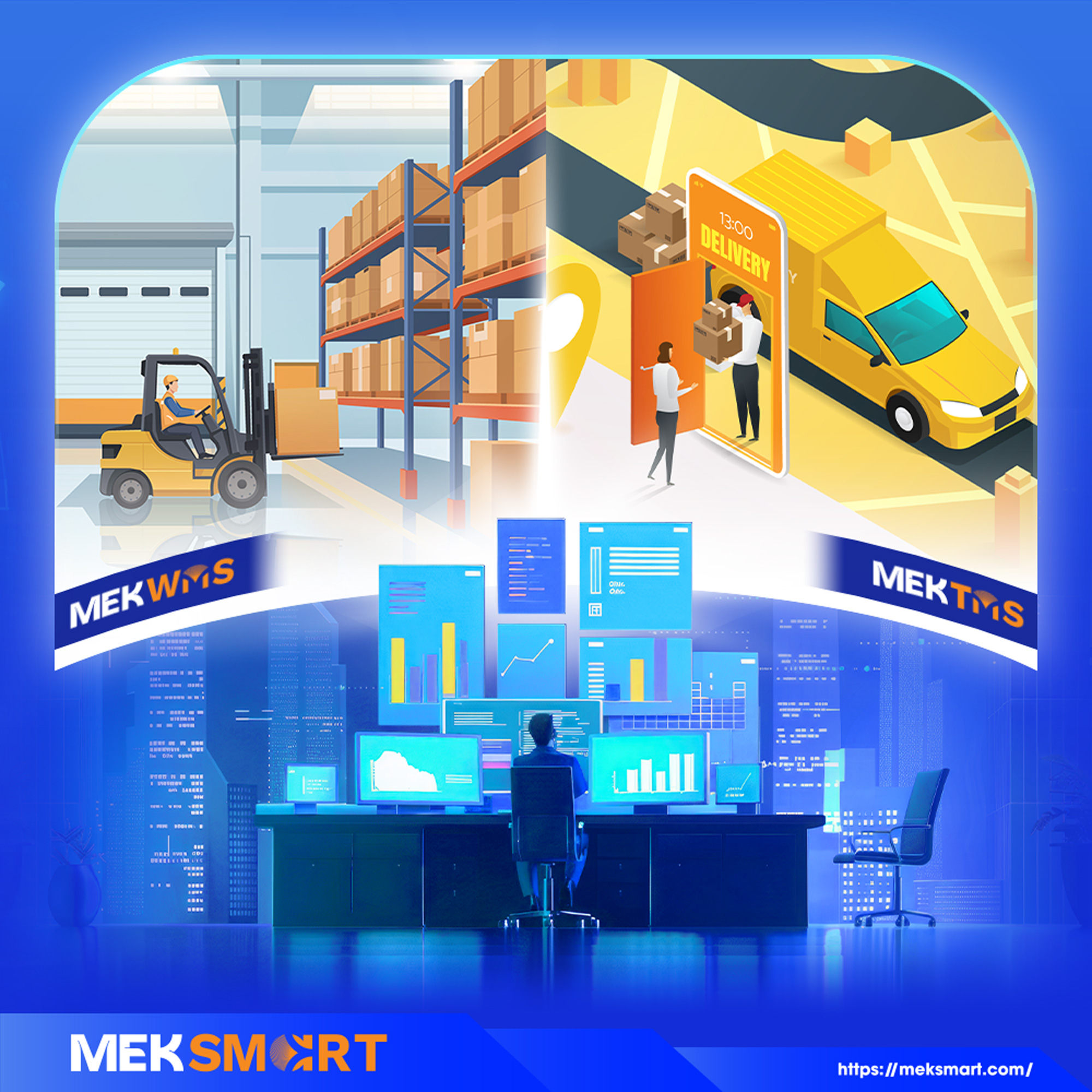
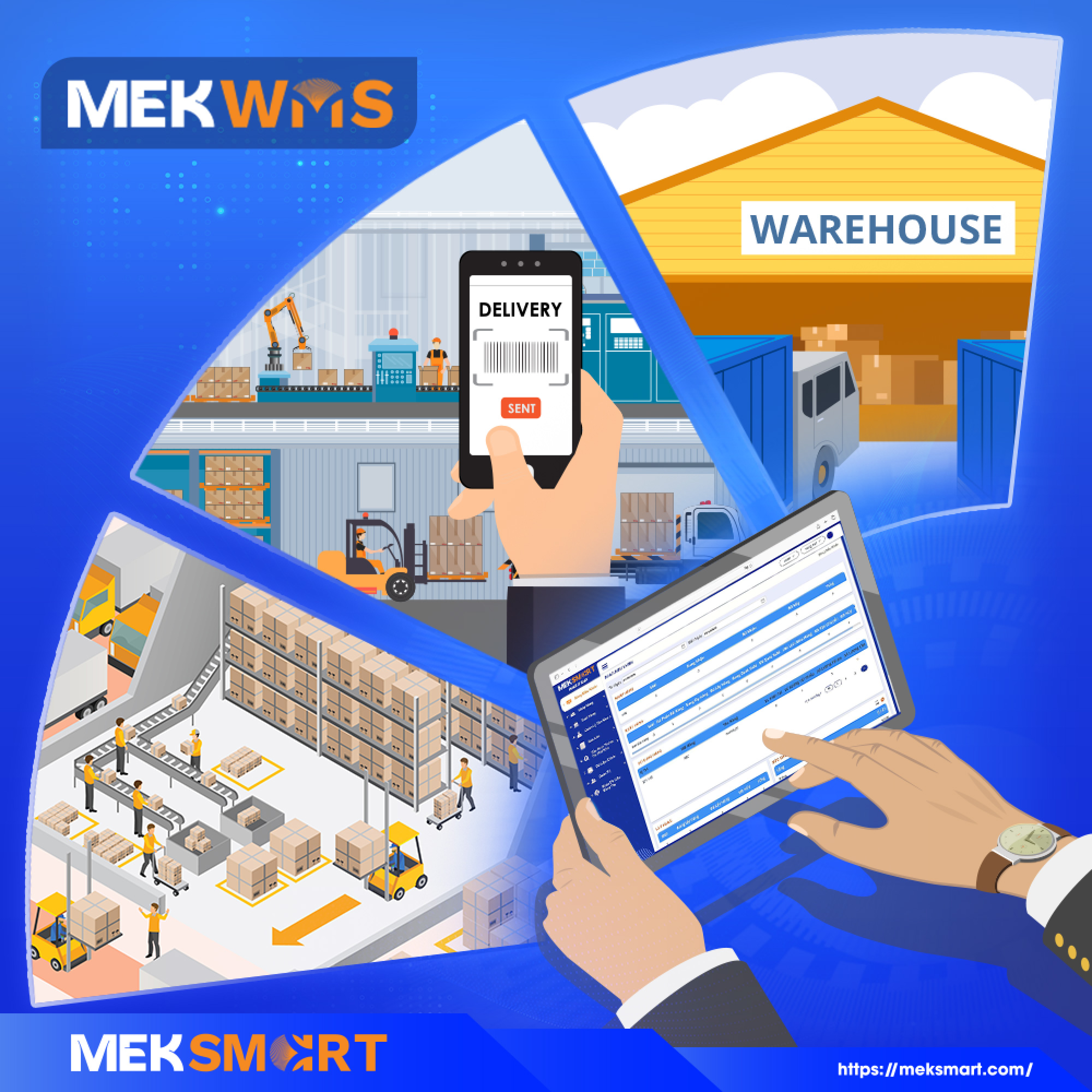
Meksmart offers an ecosystem of operational solutions comprising specialized software that integrates directly with enterprises’ existing ERP systems. Meksmart’s solutions enhance operational efficiency and enable flexible business model expansion without requiring changes to the core ERP platform.
These solutions connect data, unlock deeper ERP capabilities, and add specialized functionalities such as warehouse management, order processing, delivery management, and end-to-end supply chain coordination.
Partnering with leading enterprises such as GONSA, ADCO, VT Healthcare, and Elmich Vietnam, Meksmart helps synchronize data, automate warehouse, order, and delivery processes, and enhance real-time supply chain visibility particularly well suited for B2B business models.

The MEKSMART Solution Ecosystem Integrated with ERP for B2B
Conclusion
The B2B supply chain is becoming a direct competitive differentiator, requiring ERP systems to evolve beyond internal management toward speed, transparency, and real-time connectivity. Rather than replacing ERP, enterprises should focus on integrating and extending their existing platforms.
With this approach, Meksmart’s ERP-integrated operational software enables businesses to expand operational capabilities on top of their current ERP systems preserving core system stability while remaining agile and ready for growth in the modern B2B environment.
Feature News

MEKSMART TECHNOLOGY SOLUTION CO., LTD
Email : info@meksmart.com
Hotline : (+84)822923650
Offiice : SBI Building, Lot 6B, Street 3, Quang Trung Software Park, Trung My Tay Ward, Ho Chi Minh City, Vietnam
Industries